
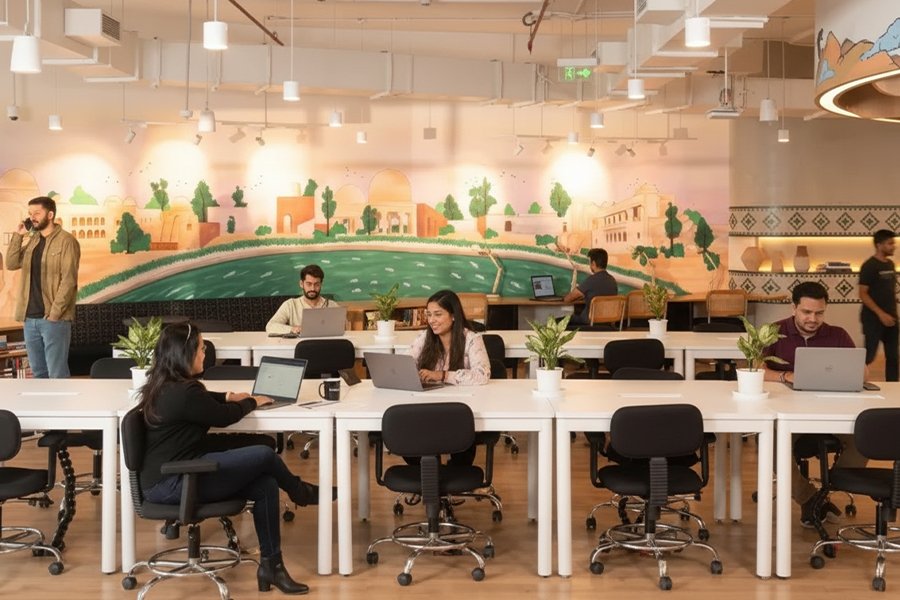
GCC Powerhouses. Tailoring Immersive Experiences for India’s 75+ MSF Office Pipeline
India’s office market in 2025 reached a scale few predicted five years ago. With more than 75 million square feet of new office supply in the pipeline across major metros, the country has cemented its position as a global hub for innovation, engineering, cybersecurity, AI development, and product design through its expanding network of Global Capability Centers. The most striking shift this year was the kind of spaces these organisations demanded. They wanted workplaces that offered not just capacity but culture and not just layouts but immersive journeys that employees genuinely enjoy being part of.
Across cities like Bengaluru, Pune, Hyderabad, Chennai, Mumbai, and Delhi NCR, one pattern kept repeating. GCCs accounted for nearly 40 to 50 percent of total office demand, and this demand wasn’t for generic space. It was for environments that could help attract global talent, accelerate daily performance, support hybrid work, and communicate a refined brand identity. The workplace became a business tool. It influenced innovation speed, retention, onboarding experience, and connection across globally distributed teams.
This change has also reshaped expectations from design partners, especially in competitive markets like NCR where many companies search for office interior designers in Delhi who understand large scale, experience driven environments. Organisations no longer wanted design that simply “looked modern”. They wanted design that guided behaviour, simplified movement, supported wellbeing, and helped teams thrive. The rise in searches for thoughtful office interior in Delhi solutions shows how strongly leadership teams are now prioritising workplace quality.
The New GCC Playbook Emerged in 2025
One of the biggest insights from this year was how differently GCCs approached the first conversation about space. They focused less on numbers and more on journeys. Many leaders described how they wanted the workplace to feel. Welcoming. Trust building. Global in aesthetic. Culturally grounded. Warm enough to encourage belonging. Professional enough to reflect the organisation’s international standards.
This emotional framing influenced every decision that followed. GCCs asked for arrival sequences that created clarity rather than overwhelm. They asked for collaboration zones that made teams feel energised rather than crowded. They asked for focus areas where employees could work without distraction. They wanted smoother transitions between high energy and low energy spaces. They wanted layouts that made navigation intuitive even for new joiners.
2025 made one thing very clear. Experience design wasn’t a luxury. It became the core expectation from every design build partner.
Why Immersive Experiences Became Essential
GCCs scaled rapidly this year and every organisation felt the pressure of attracting and retaining specialised talent. Skilled engineers, analysts, cyber teams, design researchers, and AI developers want more than compensation. They want to work in environments that support their energy and mindset. This is where immersive design played a major role.
Experience centred workplaces made people feel a stronger sense of connection with their organisation. Teams reported higher comfort levels in spaces that were designed thoughtfully. Employees felt more motivated when their environment reflected attention to detail, natural materials, better lighting patterns, and a more intentional spatial rhythm.
The idea was simple. When the workplace feels good, performance follows.
This shift was seen across large corporate campuses as well as high performance towers in Delhi NCR where many global organisations are actively searching for partners specialising in office interior designers in Delhi and premium office interior in Delhi solutions.
The Elements That Defined Experiential Workplaces in 2025
The year saw certain principles consistently appear across high performing GCC environments.
Calm, biophilic visual language. Companies integrated greenery, natural textures, and warm colour palettes to reduce cognitive load. With 84 percent of younger employees preferring nature inspired designs, biophilia became a mainstream request rather than a trend.
Flexible, modular layouts. Hybrid work required offices to be adaptable. Movable partitions, reconfigurable meeting spaces, touchdown points, and quiet pods helped teams shift effortlessly through the day. This approach supported both high focus tasks and energised collaboration without forcing teams into rigid routines.
Wellness and comfort embedded into the design. Meditation rooms, sensory spaces, softer lighting gradients, and better acoustic control helped employees feel grounded. Organisations realised that wellbeing improves not only satisfaction but also productivity and retention.
Technology integrated invisibly. Smart booking systems, occupancy sensors, high quality AV for hybrid meetings, and automated lighting controls ensured ease without visual clutter. Around 43 percent of employers added event rooms and multi purpose tech spaces as part of future ready planning.
Social hubs became cultural anchors. Teams needed areas that balanced work and connection. Café style lounges, informal collaboration corners, and softer seating clusters helped recreate a sense of community that hybrid work had weakened. These hubs encouraged cross functional conversations and spontaneous problem solving.
Why GCCs Focused on Emotional Design
What stood out in 2025 was how strongly leaders spoke about the emotional impact of space. They explained that talent does not come to office for formality. They come for clarity, belonging, collaboration, and exposure. This required spaces that feel safe, inspiring, intuitive, and aligned with the organisation’s vision.
Many GCCs also wanted workplaces that could express their brand without relying on logos or slogans. Subtle cues in materials, textures, lighting, and spatial arrangements communicated confidence and identity in a quieter, more sophisticated way. This approach resonated strongly in India, especially in Delhi NCR where companies are upgrading existing spaces and seeking thoughtful office interior in Delhi that aligns with global experience standards.
The Road Ahead for India’s GCC Landscape
The momentum from 2025 suggests the next cycle of GCC workplaces in India will be even more experience driven. As organisations expand their footprint across the country, the focus will continue shifting from square footage to qualitative impact.
India’s 75 plus million square foot pipeline is not just about meeting demand. It is about elevating the standard of workplace design across the industry. GCCs are no longer satisfied with functional layouts. They want immersive environments that support strategic goals and offer a clear competitive edge in attracting and retaining top tier talent.
