
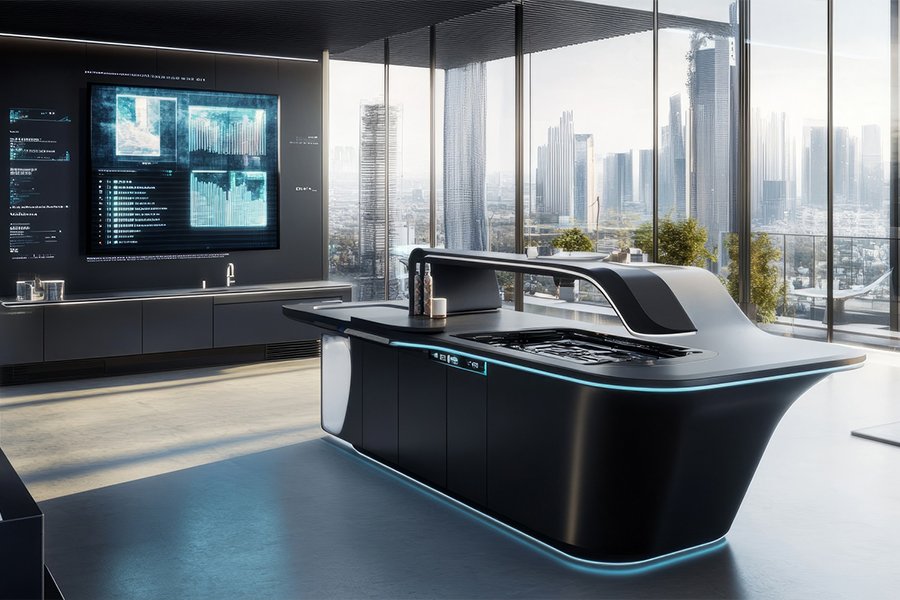
Tech Integrated Desks. The Smart Backbone of Hyderabad’s HITEC City Evolutions
Hyderabad’s office market has spent the last decade building scale. In 2025, it finally started showing how technology can reshape the everyday work experience. HITEC City has become the centre of this shift. With more than 10 million square feet of projected leasing activity driven largely by IT, GCCs, AI labs, and engineering teams, the conversation has moved far beyond traditional seating layouts. Companies are asking for intelligent workstations, automated scheduling systems, modular desk clusters, and data informed planning that can adapt as fast as their teams do.
Across these new fit outs, one pattern stood out. Around 65 percent of technology and IT led office projects now include AI enhanced booking systems, wireless charging networks, and smart desk infrastructure. This shift is not cosmetic. It reflects a new understanding of how people want to use space and how technology can improve focus, collaboration, and energy efficiency.
The demand has naturally increased the need for partners who understand both functionality and scale. Many companies expanding in the city are now searching for interior designers office Hyderabad who have experience delivering tech first workplaces. They want design teams who can plan spaces that behave intelligently instead of staying static. As organisations grow across multiple floors, ease of movement and predictability of workspace availability matter more than ever.
Why Smart Desks Became the Core of Workspace Evolution
For years, companies focused on breakout zones, meeting rooms, and social hubs. In 2025, attention shifted back to the desk. Not the conventional workstation but a responsive, digitally enabled touchpoint that supports hybrid work patterns.
Employees in Hyderabad’s tech corridors want workstations that do more than provide a surface. They want desks that automatically adjust to their preferences, recognise occupancy patterns, and connect seamlessly with their devices. AI booking systems help eliminate the back and forth of reserving space. Wireless connectivity ensures mobility. Sensors help reduce energy wastage. These features turn each desk into a micro environment that adapts to its user.
This is why many organisations now evaluate proposals from the best office interior designers in Hyderabad based on how well they integrate technology into furniture, lighting layouts, and spatial zoning.
Modular Execution Became a Strategic Tool
The rapid expansion of GCCs and IT firms in HITEC City created a new challenge. Scale was increasing, leasing cycles were tightening, and teams needed to move into space much faster. Modular execution strategies helped solve this.
Instead of designing static layouts, companies began breaking down workstations into clusters that could expand, reduce, or shift based on new team structures. Smart desks made this even easier because they do not rely on fixed wiring or traditional cabling routes. Wireless systems allow for plug and play movement, enabling teams to reshape their neighbourhoods overnight.
This flexibility became essential for cloud teams, AI groups, cybersecurity units, and data engineering pods that often scale in bursts. The smartest workplaces in 2025 were not the most visually dramatic. They were the ones that responded to organisational change without long construction cycles.
AI Booking Systems Improved Workplace Flow
The rise of hybrid work created a new challenge. Employees were returning to the office, but not every day and not in predictable patterns. Companies needed a way to ensure workpoints were available without overbuilding. AI booking solved this.
Across Hyderabad, workplaces deployed systems that studied utilisation trends, learned peak demand hours, and made recommendations on space allocation. Employees could reserve a seat before arrival, reducing anxiety and improving comfort. Facility teams received continuous data to refine layouts and identify underperforming zones.
This level of intelligence was one of the reasons many global companies preferred hiring the best office interior designers in Hyderabad. They needed partners who understood the behaviour of technology powered workplaces, not just the visual design.
What This Means for HITEC City’s Future
Hyderabad is on track to add millions of square feet of tech driven workspace over the next few years. As AI, cloud engineering, biotech computing, and gaming studios expand their India footprint, the demand for intelligent workstations will only rise.
Smart desks are no longer a premium feature. They are becoming the backbone of modern office strategy. They support mobility. They reduce operational friction. They create a sense of ease for teams navigating hybrid schedules. They allow companies to plan future expansions without redesigning the entire floor.
Organisations will continue looking for interior designers office Hyderabad who understand this shift. They will expect the best office interior designers in Hyderabad to design environments where technology disappears into the background and the user experience becomes effortless.
